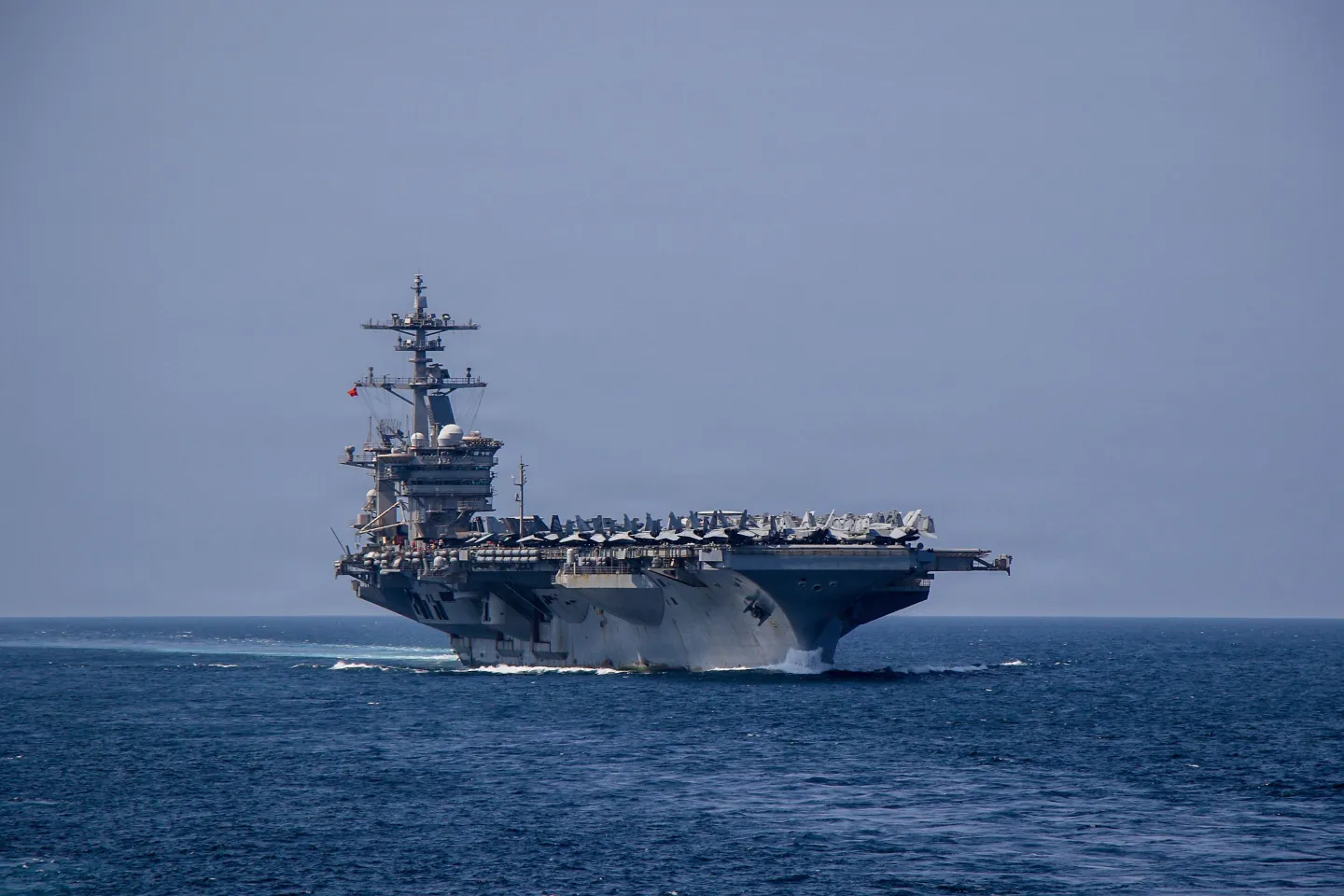

The United States on Monday began enforcing a blockade targeting Iranian-linked shipping activity in the Strait of Hormuz, escalating pressure on Tehran after diplomatic negotiations failed to produce a breakthrough.
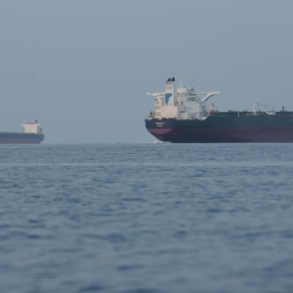
The blockade took effect at 10 a.m. ET, with U.S. officials confirming that ships entering or leaving Iranian ports near the strategic waterway would be restricted. The move marks a sharp escalation in tensions, particularly given the Strait’s role as one of the world’s most critical energy corridors.
The decision follows the collapse of recent peace talks between U.S. and Iranian negotiators, which had briefly raised hopes of a resolution to the ongoing conflict.
Trump issues stark warning to Iranian vessels
As the blockade took effect, Donald Trump issued a direct and forceful warning to Iran’s naval units, particularly its fast attack vessels.
“If any of these ships come anywhere close to our BLOCKADE, they will be immediately ELIMINATED, using the same system of kill that we use against the drug dealers on boats at Sea,” Trump wrote on Truth Social. “It is quick and brutal.”
The warning underscores the administration’s readiness to enforce the blockade militarily if necessary, raising concerns about potential clashes in the already volatile region.
Trump had earlier announced the blockade plan in a separate post, criticizing Iran for refusing to abandon its nuclear ambitions and accusing the country of engaging in “WORLD EXTORTION” by restricting access to the vital shipping lane.
Scope of the blockade and military clarification
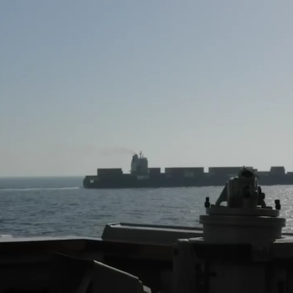
According to U.S. officials, the blockade applies broadly to maritime traffic linked to Iranian ports. However, the U.S. Central Command clarified that the action is not intended to disrupt global shipping beyond Iranian-linked activity.
American forces “will not impede freedom of navigation for vessels transiting the Strait of Hormuz to and from non-Iranian ports,” CENTCOM said.
At the same time, it emphasized that enforcement would remain strict:
“The blockade will be enforced impartially against vessels of all nations entering or departing Iranian ports and coastal areas, including all Iranian ports on the Arabian Gulf and Gulf of Oman.”
This dual approach aims to isolate Iran economically while avoiding a full shutdown of global maritime trade through the strait.
Markets react as oil surges and stocks fall
Financial markets responded swiftly to the escalation.
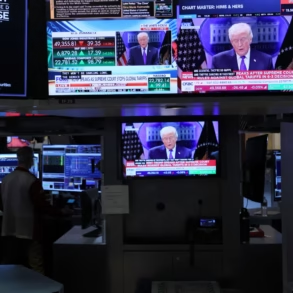
U.S. stock futures declined ahead of the blockade’s implementation, reflecting investor concerns about rising geopolitical risk. At the same time, crude oil prices surged as traders priced in the potential for supply disruptions.
The Strait of Hormuz handles roughly 20% of global oil and gas flows, making any disruption in the region a major driver of price volatility.
The blockade’s announcement adds to existing uncertainty, particularly after weeks of fluctuating market reactions tied to ceasefire developments and shifting diplomatic signals.
Allies hesitate as US moves forward
While Trump indicated that other countries could participate in the blockade effort, early signs suggest limited international support.
Key U.S. allies, including NATO members Britain and France, have reportedly declined to join the operation, raising questions about the level of coordinated global pressure on Iran.
The lack of unified backing could complicate enforcement and potentially limit the blockade’s effectiveness, even as the U.S. moves ahead unilaterally.
Iran responds with defiance and economic warning
Iranian officials reacted strongly to the blockade announcement, warning that the move could backfire economically by driving up global energy costs.
Mohammad Bagher Ghalibaf, Iran’s parliamentary speaker, issued a pointed message on social media:
“Enjoy the current pump figures. With the so-called ‘blockade’, Soon you’ll be nostalgic for $4–$5 gas.”
The comment highlights Tehran’s strategy of framing the blockade as a global economic threat, rather than a targeted measure against Iran alone.
Ceasefire unravels as tensions escalate
The blockade comes against the backdrop of a fragile ceasefire that now appears increasingly unstable.

Although the truce has not been formally abandoned, both sides have accused each other of violating its terms, weakening already limited trust between Washington and Tehran.
The ceasefire itself was brokered only days earlier, following a dramatic ultimatum from Trump, who warned that Iran’s “whole civilization will die” if no agreement was reached by a set deadline.
Despite the urgency, negotiations ultimately broke down.
Failed talks mark turning point in conflict
U.S. negotiators, led by Vice President JD Vance, had traveled to Islamabad over the weekend in an effort to secure a diplomatic resolution.
The talks lasted for 21 hours, raising initial optimism that a deal could be reached.
However, Vance confirmed early Sunday that the delegation would return without an agreement, citing Iran’s refusal to commit to abandoning nuclear weapons development.
The breakdown marked a turning point, clearing the path for the blockade and a more aggressive U.S. stance.
What happens next for global markets and energy supply
The introduction of the blockade adds a new layer of uncertainty to global markets, particularly in energy.
With tensions rising and shipping risks increasing, oil prices are expected to remain elevated, while equity markets may continue to face pressure.
At the same time, the situation leaves little room for error. Any direct confrontation in the Strait of Hormuz could trigger a broader escalation, with far-reaching consequences for global trade and economic stability.
For now, the blockade signals a decisive shift away from diplomacy and toward economic and military pressure, as the U.S. seeks to force Iran back to the negotiating table.