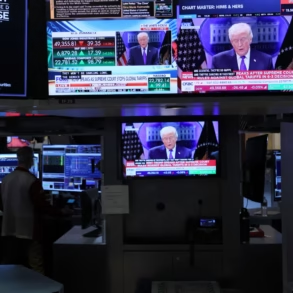



The Federal Reserve is widely expected to leave interest rates unchanged this week as policymakers assess the growing economic uncertainty caused by the ongoing Iran conflict.
With the war in the Middle East now entering its third month, officials are weighing how higher oil prices, supply disruptions, and inflation risks could affect the U.S. economy. Many analysts believe those concerns will keep the central bank on hold for now.
The Fed’s next policy decision is due on Wednesday, and markets are looking for guidance on whether rate cuts are still possible later this year.
Fed Likely to Stay on Hold
Former Cleveland Federal Reserve President Loretta Mester said uncertainty surrounding the conflict remains a major factor.
“There’s still uncertainty about how this war is going to be resolved, and oil prices have been volatile. But they’re still well above where they were before the war started, and so that will eventually have an impact on the economy,” Mester said.
Former Kansas City Fed President Esther George also expects policymakers to remain cautious.
“I think what this does for them is to say, ‘We’re going to just have to stay on hold and kind of look for a window to cut,’ because they haven’t really changed that bias in their calculation,” George said.
She added that rates could remain unchanged for much of the year, or at least into the second half.
Oil Prices Driving New Inflation Concerns
One of the biggest issues for the Federal Reserve is the rise in oil prices since the conflict began.
Higher crude prices have pushed gasoline costs sharply higher. That has already lifted headline inflation and placed more pressure on consumers.
So far, broader inflation in goods and services has not risen at the same pace. However, Fed officials are watching closely to see whether energy costs begin spreading across the wider economy.
Mester said that is likely to be a key topic at this week’s meeting.
“That’s what they’re going to focus on at this meeting,” she said.
George also said policymakers may tolerate higher inflation if it is limited mainly to gasoline.
“If it’s just higher gasoline prices, I don’t think that shifts the bias, though it may keep them on hold longer,” George said. “It’s really looking [at] where else are we seeing inflation picking up.”
Why the Fed Is Being Careful
The Federal Reserve learned during the pandemic that inflation caused by supply shocks can last longer than expected.
At the time, many price increases were first seen as temporary. Instead, inflation remained elevated for years.
Now, officials face a similar challenge. Tariffs had already lifted the price of some goods, and the latest oil shock may add another layer of pressure.
Fed Governor Chris Waller recently raised questions about when repeated one-time shocks stop being temporary and become persistent inflation.
That concern is now central to the Fed’s thinking.
Inflation Expectations Still Matter
Another reason for caution is long-term inflation expectations.
The central bank has often said inflation expectations remain “well anchored,” meaning households and businesses still believe inflation will return near 2% over time.
George suggested that confidence may be tested after years of elevated prices.
“Remember this whole campaign for the last five years has been premised on inflation expectations are well anchored, and I just think that’s getting to be a shakier platform as we go forward with an inflation rate that was already higher,” she said.
If expectations rise sharply, it could make inflation harder to control.
Consumers Feeling the Pressure
Higher gasoline prices are already affecting spending patterns.
According to the report, tax refunds were up 20% through April 15, totaling $45 billion more than last year. However, rising fuel costs were consuming a large portion of that extra money.
Luke Tilley, chief economist at Wilmington Trust, said gasoline spending was absorbing about one-third of the refund boost.
That means households may have less money available for other purchases.
When consumers cut back, economic growth can slow quickly.
Growth Risks Could Revive Rate Cuts
While markets currently expect no rate cuts this year, Tilley still sees the possibility of three cuts beginning as early as July.
He believes high energy prices will eventually weaken spending enough to slow inflation and reduce growth.
“If you don’t have strong enough growth or strong enough consumers, then you can’t have enduring inflation because they will spend less,” Tilley said.
“They will cut back. Firms will see that. They will cut jobs, but they’ll also stop pushing through the price increases to try and preserve their market share, and you get slower inflation.”
He added, “All of the supply components are there to push up prices, and none of the demand components are there.”
That view suggests the Fed may eventually shift from fighting inflation to protecting growth.

Mester Warns Against Cutting Too Soon
Not everyone agrees that cuts should come quickly.
Mester said policymakers need clearer evidence that inflation is returning toward target before easing policy.
“If I were them, I would need to see much more convincing evidence that we’ve gotten beyond the upside factors supporting higher inflation — and I’ve not seen inflation actually moving down on its path towards 2% — before I’d be comfortable resuming rate cuts,” she said.
That means the central bank could stay patient even if growth softens.
Powell’s Final Meeting as Chair?
This week’s meeting may also carry leadership significance.
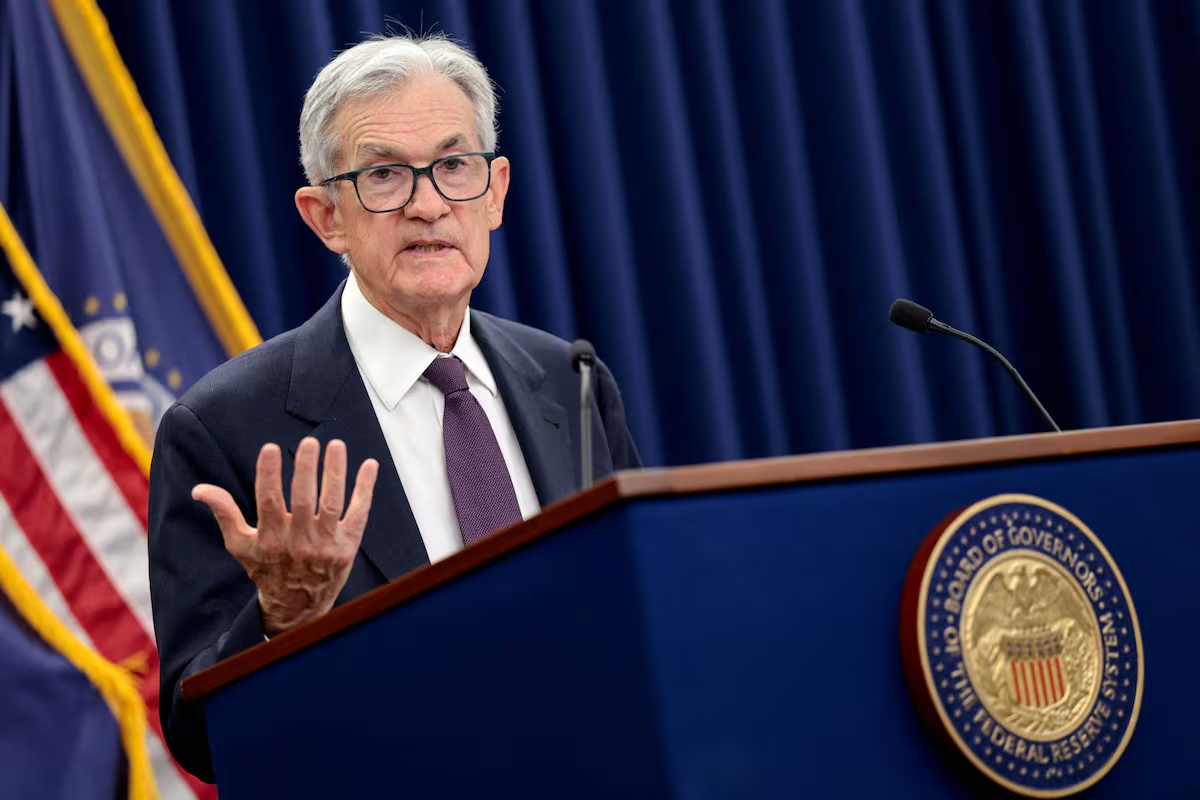
It could be Jerome Powell’s final Fed meeting as chair. If successor Kevin Warsh is not confirmed by May 15, Powell has said he would remain as chair pro tem.
A key obstacle to Warsh’s confirmation was removed on Friday when the Justice Department dropped a criminal investigation involving Powell and referred the matter to the Fed’s Inspector General.
Markets will watch closely for any leadership developments alongside the policy statement.
Markets Expect No Immediate Change
Wilmington Trust senior bond fund manager Wil Stith said the central bank is unlikely to make major changes this week.
“The Fed is going to sit tight,” Stith said. “They’re going to say the exact same thing as last meeting. Powell wants to leave Warsh with as much flexibility as he can.”
That view reflects the broader expectation that the Fed will wait for clearer evidence before moving rates.
Focus Turns to Powell’s Message
Even if rates remain unchanged, investors will closely study Powell’s comments for clues about future cuts.
Key questions include:
- How concerned is the Fed about oil-driven inflation?
- Does the conflict threaten consumer spending?
- Are cuts still possible later this year?
- How long can the Fed remain patient?
Those answers could shape markets in the weeks ahead.
Fed Faces Difficult Balance
The Federal Reserve enters this meeting with inflation still above target and new risks emerging from abroad.
Oil prices remain elevated. Consumers are under pressure. Growth could slow if the conflict drags on.
For now, the most likely outcome is no change in rates. But the longer the Iran conflict lasts, the harder the Fed’s job may become.