

Global financial markets are facing growing warnings that investors may be underestimating the economic fallout from surging energy prices linked to the ongoing Iran war. Despite a sharp rise in oil costs, stock markets have continued to climb, raising concerns among analysts that optimism may be misplaced.
Energy experts and economists now warn that the world economy could be “sleepwalking” into a major downturn if the current trajectory continues.
Oil Price Shock Collides With Market Optimism
Oil prices have surged dramatically since the conflict between the United States and Iran began earlier this year. Prices have climbed more than 50%, creating a significant shock to global energy markets.
Yet equity markets have moved in the opposite direction.
The S&P 500 recently reached a new all-time intraday high, touching 7,230.12. This rally has puzzled analysts, given the scale of the energy disruption currently unfolding.
Amrita Sen, founder and director of market intelligence at Energy Aspects, described the situation as deeply contradictory.
“This has been the biggest conundrum for us — if anything, we think oil should be higher and the equity market should be a lot, lot weaker,” Sen said.
She added a stark warning: “I think we’re sleepwalking into potentially a pretty big recession.”
‘Misplaced Euphoria’ Among Investors
According to Sen, the current market reaction reflects what she called an “extremely misplaced euphoria.”
She argued that many investors are treating the energy crisis as a regional issue, assuming it primarily affects Asian economies. However, the ripple effects are expected to be global.
“This is a massive, massive energy crisis,” Sen said. “I have been equally amazed at how the equity market is completely dismissing it.”
She warned that current optimism is likely to fade as economic data begins to reflect the full impact of rising energy costs.
Strait of Hormuz Remains Central to Outlook
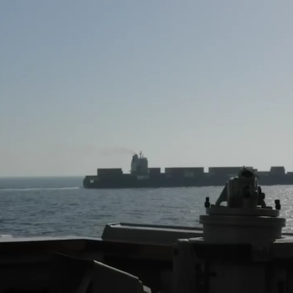
A key factor shaping the global energy outlook is the status of the Strait of Hormuz, one of the world’s most critical shipping routes.
The pace and scale of its reopening will determine how quickly energy supplies stabilize.
“The story is really when Hormuz reopens, and at what capacity and what pace it reopens,” Sen explained.
If disruptions persist, global energy demand may need to adjust sharply. Sen suggested that the world could be forced to revert to significantly lower consumption levels.
“If you assume that the Strait remains disrupted for a longer period of time, you are saying that we all need to go back to 2013 demand levels,” she said.
That adjustment would come despite a larger global population and higher overall energy needs today.
Energy Crisis Spreading Across Industries
The impact of rising oil prices is already being felt across multiple sectors.
Higher energy costs are increasing production expenses for industries such as:
- Chemicals
- Food production
- Fertilizers
- Airlines
Sen warned that the effects are only beginning to surface.
“Just wait for food prices to start going up because of what’s going on; the lack of urea transport; and natural gas prices, or natural gas being curtailed in the fertilizer sector,” she said.
These pressures could soon translate into broader inflation, affecting consumers worldwide.
Oil Prices Expected to Stay Higher for Longer
Looking ahead, Sen said oil prices are unlikely to return to previous levels anytime soon.
She expects prices between $80 and $90 per barrel to become the new baseline, even under more stable conditions.
At the time of reporting, Brent crude was trading above $110 per barrel, while U.S. West Texas Intermediate crude surpassed $104.
Such elevated prices are expected to ripple across global commodity markets, influencing everything from fuel to agriculture.
Airlines and Manufacturing Under Pressure
Economists are also highlighting the strain on key sectors that depend heavily on energy.
Jens Eisenschmidt, chief Europe economist at Morgan Stanley, pointed to rising concerns within the airline industry.
He noted growing anxiety over jet fuel shortages and increasing costs.
Manufacturers are also facing challenges, even in industries where oil is only a small input.
“The tensions are visibly increasing in the system,” Eisenschmidt said.
He warned that even minimal reliance on oil can create cost pressures when prices spike significantly.
A ‘Day of Reckoning’ May Be Approaching
Eisenschmidt cautioned that markets may soon face a reality check.
“I think we are nearing here a day of reckoning,” he said.
He suggested that the current disconnect between energy markets and equity performance cannot persist indefinitely.
If oil prices remain elevated, the broader economic impact could become unavoidable.
Europe Faces Rising Economic Risks
The situation is particularly concerning for Europe, where economies are more vulnerable to energy price shocks.
Eisenschmidt said a quick resolution to the conflict could allow the European Central Bank to look past the current spike and return inflation toward its 2% target.
However, that window is narrowing.
“I think we have to really look into the next one or two weeks for a resolution,” he said.

“If not, I think we will be facing that rate hike by the ECB.”
This highlights the risk that prolonged energy disruption could force central banks to tighten policy, even as growth slows.
Inflation Risks Continue to Build
Rising oil prices are one of the most direct drivers of inflation.
Higher fuel costs increase transportation expenses, which then feed into the prices of goods and services.
At the same time, disruptions in natural gas and fertilizer markets could push food prices higher.
These combined effects raise the risk of sustained inflation, particularly if the conflict drags on.
Markets May Be Underestimating the Impact
Despite these risks, equity markets have remained resilient.
Analysts warn that this resilience may be based on overly optimistic assumptions about the duration and impact of the conflict.
Sen emphasized that current corporate performance may not reflect future conditions.
“They are not going to be great nearly to the same extent in Q2,” she said, referring to company earnings.
This suggests that markets could face downward pressure as economic data begins to align with rising energy costs.
A Fragile Balance Between Growth and Energy Costs
The global economy now faces a delicate balance.
On one hand, energy prices are rising sharply, increasing costs for businesses and consumers. On the other hand, financial markets continue to signal confidence.
If this imbalance persists, analysts warn that the adjustment could be abrupt.
The key variables remain:
- The duration of the Iran conflict
- The stability of oil supply routes
- The response of central banks
- The resilience of consumer demand
Conclusion: Growing Risks Beneath Market Strength
The current market environment reflects a growing divergence between financial optimism and economic fundamentals.
While stocks continue to rise, energy markets are signaling significant stress.
Analysts warn that this disconnect may not last.
As oil prices remain elevated and supply disruptions continue, the risk of a broader economic slowdown is increasing.
Whether markets adjust gradually or face a sharper correction will depend largely on how the geopolitical situation evolves in the coming weeks.