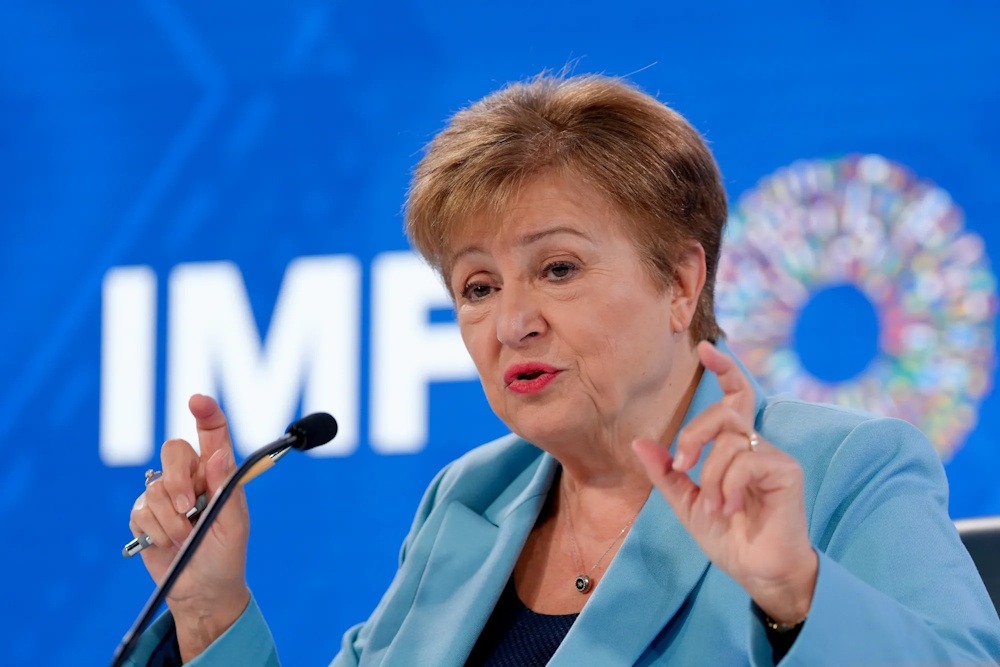

The International Monetary Fund has warned that the Iran war impact on UK growth will be the most severe among advanced economies in 2026.
In its latest World Economic Outlook, the IMF said the United Kingdom will face the sharpest slowdown among G7 nations as the Middle East conflict continues to weigh on global economic stability.
The warning highlights growing concerns that the ongoing war is no longer just a geopolitical issue, but a major economic threat with long-term consequences.
UK growth forecast downgraded sharply
According to the IMF, the UK economy is now expected to grow by just 0.8% in 2026, down from 1.3% in 2025.
This marks the biggest downgrade among major developed economies.
By comparison:
- The United States is projected to grow by 2.3%
- The euro area by 1.1%
- Spain by 2.1%
- France by 0.9%
These figures show how the Iran war impact on UK growth stands out, placing the country behind its peers at a time when global conditions are already fragile.
Global economy faces new pressure from conflict
The IMF stressed that the global economy is entering a difficult phase.
It noted that the world had only recently recovered from trade and tariff disruptions, making the current geopolitical shock even more challenging.
The organization warned that the war could worsen if it continues for longer than expected. This would increase pressure on already weak growth levels across major economies.
“A longer or broader conflict, worsening geopolitical fragmentation, a reassessment of expectations surrounding artificial-intelligence-driven productivity, or renewed trade tensions could significantly weaken growth and destabilize financial markets,” the IMF said.
Risks extend beyond short-term slowdown
Beyond immediate growth concerns, the IMF pointed to deeper structural risks.
These include:
- Rising public debt
- Weakening institutional credibility
- Increased market volatility
The fund warned that these factors could amplify the Iran war impact on UK growth and the wider global economy if not managed carefully.
It emphasized that the situation could trigger longer-term economic instability if governments fail to respond effectively.
IMF calls for coordinated global response
To manage the crisis, the IMF urged governments to take coordinated action.
It stressed the importance of:
- Strong and credible economic policies
- Flexibility in responding to shocks
- International cooperation
“Fostering adaptability, maintaining credible policy frameworks, and reinforcing international cooperation are essential to navigating the current shock while preparing for future disruptions in an increasingly uncertain global environment,” the IMF said.
Outlook remains uncertain
The outlook for the UK and the global economy remains uncertain.
While the downgrade reflects current expectations, much will depend on how the conflict evolves in the coming months.
For now, the Iran war impact on UK growth has become a key concern for policymakers, investors, and businesses alike.
If tensions escalate further, the economic consequences could deepen — not just for the UK, but for the global economy as a whole.