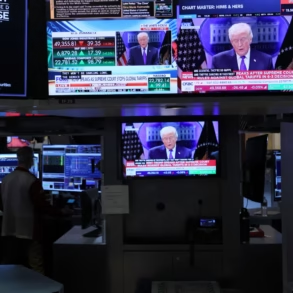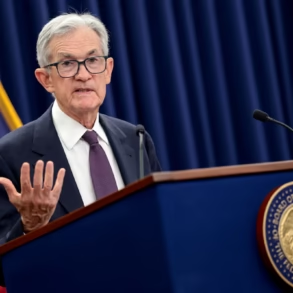

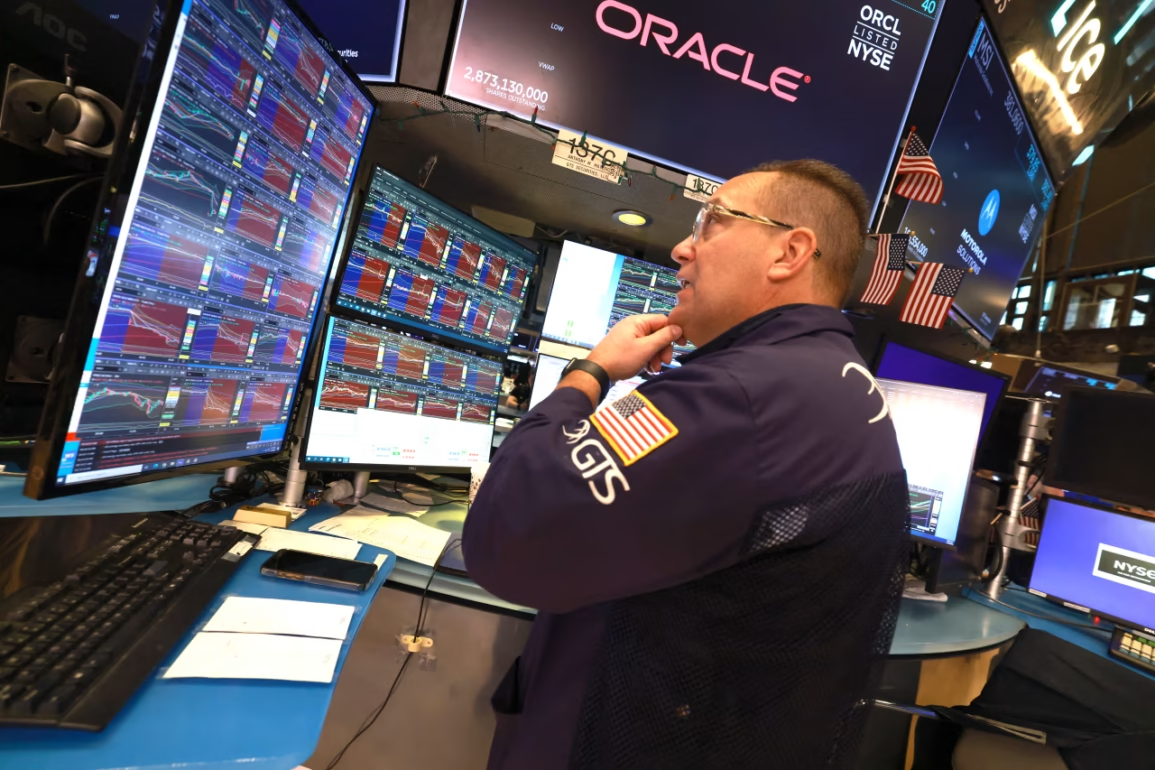

U.S. stocks moved higher on Wednesday, extending a strong rally on Wall Street as investors reacted to signs that tensions between the U.S. and Iran may be easing.
The S&P 500 rose about 0.6%, while the Nasdaq Composite and Dow Jones Industrial Average climbed roughly 0.7% each, building on gains recorded at the end of the first quarter.
The move higher came as markets responded to growing expectations of a potential diplomatic off-ramp in the Iran conflict, which has driven volatility across global markets in recent weeks.
Market rally driven by de-escalation signals
Investor sentiment improved after comments from both Tehran and Washington suggested a possible path toward ending the war.
Iranian President Masoud Pezeshkian indicated openness to de-escalation under certain conditions, saying Iran has “the necessary will to end this war.”
At the same time, U.S. President Donald Trump signaled a shift in tone, suggesting the conflict may not drag on much longer.
Trump said U.S. involvement could end “within two weeks, maybe two weeks, maybe three,” and added that the war would not last “much longer.”
He is also expected to deliver an update on the conflict in a national address scheduled for Wednesday evening, a development that investors are likely to watch closely for further signals on the direction of policy and military engagement.
The combination of these remarks helped ease immediate fears of further escalation, prompting a rebound in risk assets.
Oil prices fall as stocks rise
Oil markets moved in the opposite direction, with prices falling as optimism around de-escalation reduced fears of supply disruption.
Brent crude dropped more than 1% to trade near $103 per barrel after steeper losses earlier in the session. Meanwhile, U.S. benchmark West Texas Intermediate crude slipped below the $100 mark before recovering slightly above it.
The decline reflects a shift in expectations around supply risks, particularly as markets reassess the likelihood of prolonged disruption to critical shipping routes.
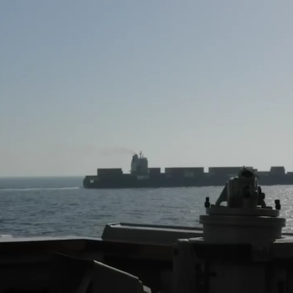
In recent weeks, oil prices had surged on concerns that the conflict could threaten flows through key chokepoints such as the Strait of Hormuz, a vital corridor for global energy supply.
As those fears begin to ease, at least temporarily, energy markets have adjusted accordingly, with traders unwinding some of the risk premium that had built up during periods of heightened tension.
Still, oil remains elevated relative to pre-conflict levels, highlighting the fragile balance between geopolitical risk and supply expectations.
Economic data adds to positive momentum
Beyond geopolitical developments, investors also digested a fresh batch of economic data that came in stronger than expected.
ADP reported that private employers added 62,000 jobs in March, suggesting continued resilience in the labor market despite broader uncertainty. At the same time, U.S. retail sales rose 0.6% month over month, exceeding forecasts and pointing to steady consumer demand.
These data points helped reinforce confidence that the U.S. economy remains on stable footing, even as external risks — including geopolitical tensions and energy price swings — continue to cloud the outlook.

Market participants are also awaiting further insight into manufacturing activity, with the latest reading from the Institute for Supply Management expected later in the day.
Together, these indicators provide a broader picture of economic conditions and are likely to influence expectations around growth, inflation, and potential policy responses.
Broader market context and outlook
Wednesday’s gains follow a broader rally that helped Wall Street close out the first quarter on a strong note, despite a turbulent period marked by sharp swings tied to developments in the Middle East.
Markets have repeatedly reacted to headlines surrounding the Iran conflict, with equities and oil prices moving in opposite directions depending on whether news pointed to escalation or de-escalation.
The latest rally underscores how sensitive investor sentiment remains to geopolitical developments, particularly those that carry implications for global energy supply and inflation.
For now, signs of potential diplomacy have provided a measure of relief, supporting equities while easing pressure on oil prices.
However, uncertainty remains elevated. Any shift in tone — whether from Washington or Tehran — could quickly alter the market trajectory, reintroducing volatility across asset classes.
Investors are likely to remain focused on upcoming political developments, including Trump’s expected address, as well as continued economic data releases that may shape expectations for the path ahead.