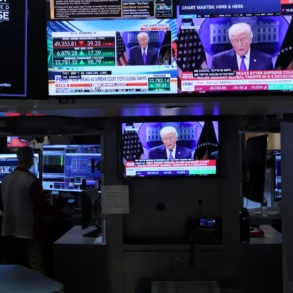


US stocks surged on Wednesday while oil prices plunged, as investors reacted to news of a temporary ceasefire between the United States and Iran, raising hopes for stability in global markets.
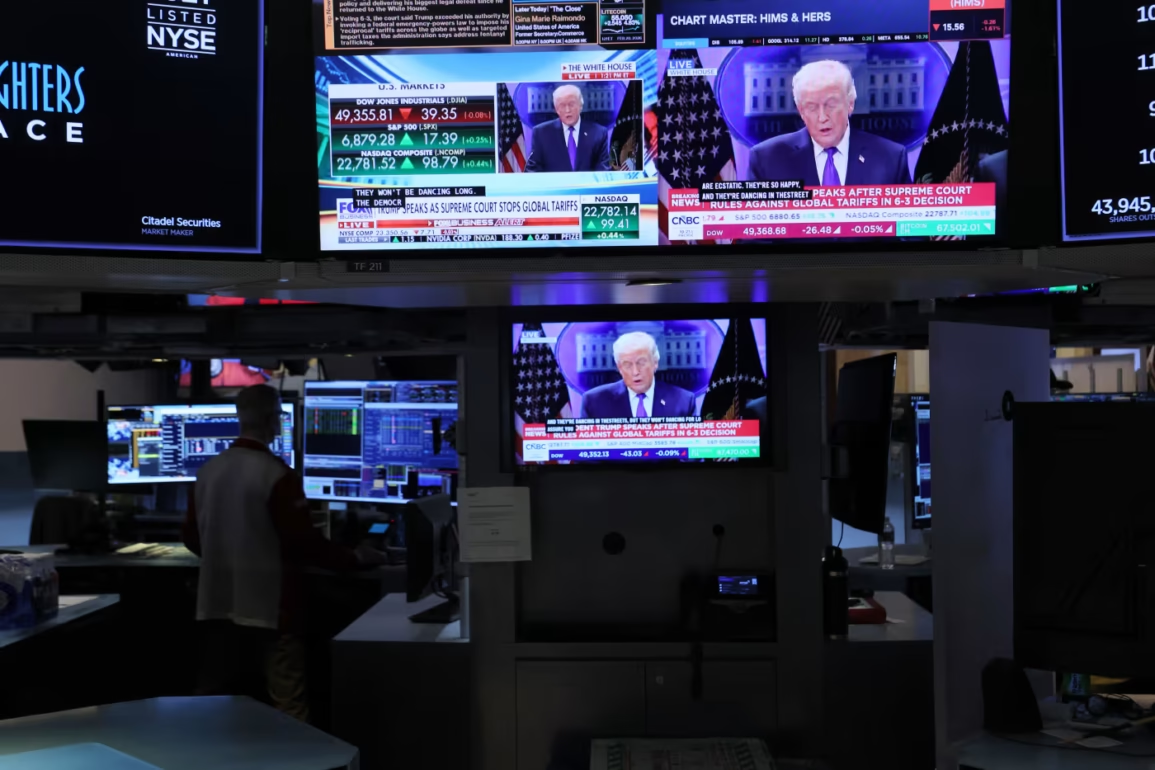
The S&P 500 climbed sharply, gaining more than 2%, while the Nasdaq Composite jumped roughly 2.6%. The Dow Jones Industrial Average soared over 1,000 points, reflecting a strong return of risk appetite across Wall Street.
The rally came after President Donald Trump announced a two-week pause in hostilities with Iran, a move that could pave the way for the reopening of the critical Strait of Hormuz.
In a post on Truth Social, Trump said:
“I agree to suspend the bombing and attack of Iran for a period of two weeks. This will be a double sided CEASEFIRE!”
The announcement triggered immediate optimism in global markets, as investors interpreted the temporary truce as a sign of potential de-escalation in a conflict that has rattled financial markets and energy supplies for weeks.
Oil Prices Sink as Supply Concerns Ease
Oil markets reacted even more dramatically to the ceasefire news, with prices plunging sharply amid expectations of improved supply conditions.
Futures for Brent crude dropped more than 13%, while West Texas Intermediate crude fell as much as 15% to 18%, reflecting a rapid unwinding of geopolitical risk premiums.
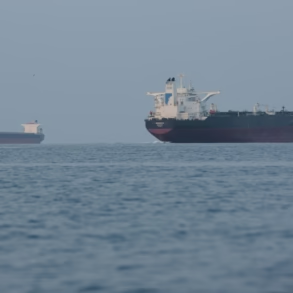
The decline was fueled by hopes that shipping through the Strait of Hormuz — a narrow but vital passage for global oil flows — would resume more freely.
Iran’s Foreign Minister, Abbas Araghchi, confirmed Tehran’s acceptance of the ceasefire terms shortly after Trump’s announcement. He stated that if attacks on Iran are halted, its own operations would cease and that:
“for a period of two weeks, safe passage through the Strait of Hormuz will be possible via coordination with Iran’s Armed Forces.”
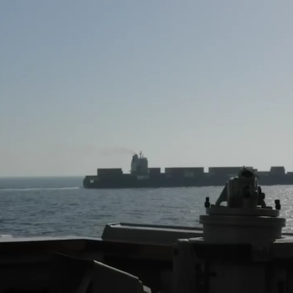
Early signs of that reopening have already emerged, with some ships reportedly transiting the waterway again. Even limited movement through the strait has had a significant calming effect on energy markets.
Markets Rebound on Renewed Risk Appetite
The sharp drop in oil prices has also eased inflation concerns, prompting renewed expectations that the Federal Reserve could move toward interest rate cuts later this year.
Lower energy costs are often seen as a key factor in reducing broader price pressures, and the sudden decline in crude prices has shifted market sentiment almost immediately.
On the corporate side, airline stocks also benefited from the drop in fuel costs. Shares of Delta Air Lines jumped after the company reported stronger-than-expected quarterly earnings, noting that demand for premium travel remains robust despite broader economic uncertainty.
The combined effect of easing geopolitical tensions and improving corporate outlooks helped drive a broad-based rally across equities.
Uncertainty Lingers Despite Ceasefire
Despite the market optimism, the situation remains fragile, with fresh threats raising concerns about how long the ceasefire can hold.
Iranian state-linked sources signaled that the country could halt all traffic through the Strait of Hormuz again if regional tensions escalate, particularly in relation to Israel’s military actions in Lebanon.
In a message attributed to an account close to the regime, a warning was issued:
“If the Israeli regime does not commit to a ceasefire in Lebanon, the war will resume within a few hours.”

These developments highlight the complex and interconnected nature of the conflict, where tensions in one area could quickly unravel progress elsewhere.
At the same time, reports suggest that Iran remains open to negotiations with the United States, even as it considers potential responses to ongoing regional developments. This dual approach — engaging diplomatically while maintaining leverage — has added to the uncertainty facing markets.
Strait of Hormuz Remains the Key Focus
At the center of the market’s reaction is the Strait of Hormuz, a crucial chokepoint through which a significant portion of the world’s oil supply passes.
Any disruption to this route has immediate global consequences, as seen in recent weeks when heightened tensions led to sharp spikes in oil prices and increased volatility across financial markets.
Data from maritime intelligence sources indicates that traffic through the strait has yet to fully recover to normal levels, despite the ceasefire announcement. This suggests that while confidence is improving, the situation on the ground remains far from stable.
A Fragile Path Forward
While the ceasefire has provided temporary relief, investors are likely to remain cautious as the situation continues to evolve.
The two-week window announced by Trump offers an opportunity for diplomatic progress, but it also creates a clear deadline that could either lead to a more lasting agreement or a renewed escalation of conflict.
For now, markets are reacting to the immediate reduction in risk, with stocks surging and oil prices retreating sharply. However, the persistence of geopolitical tensions means that volatility could return just as quickly if negotiations falter.
As the situation unfolds, both financial markets and global energy supplies will remain closely tied to developments in the region, making the coming weeks a critical period for investors and policymakers alike.