
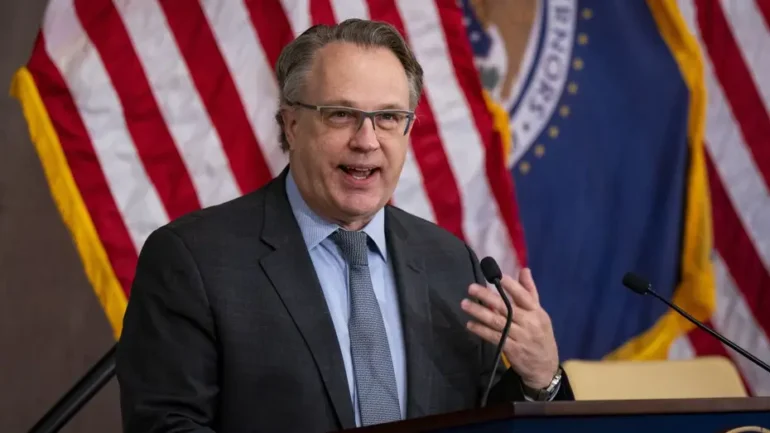

New York Federal Reserve President John Williams says the Iran war could push inflation higher and slow economic growth in the United States.
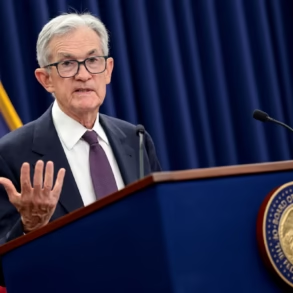
Speaking in New York on Thursday, Williams said the Middle East conflict has created “substantial risks” for the economy. He added that rising commodity prices and energy disruptions are already increasing pressure on households and businesses.
The comments suggest the Federal Reserve may keep interest rates steady while it watches inflation and growth trends.
Energy Prices Driving New Risks
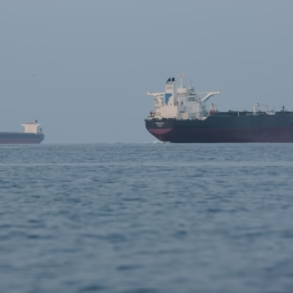
Williams said the biggest danger comes from a supply shock caused by higher oil and commodity prices.
He explained that rising energy costs are not only increasing fuel prices. They are also lifting the cost of air travel, groceries, fertilizer, and many consumer goods.
“This has begun to play out already,” Williams said.
He added that while the data does not yet show broad supply-chain bottlenecks, the economy is seeing more disruptions tied to energy and related products.
Inflation Forecast Moves Higher
Williams raised the upper end of his inflation outlook for this year.
He now expects inflation to finish between 2.75% and 3%, reflecting the latest pressure from energy markets and global tensions.
That increase shows how quickly geopolitical conflict can affect price expectations.
Still, Williams said inflation could return to the Fed’s 2% target next year if energy prices ease and tariff effects fade.
Tariff Impact May Fade
Williams also addressed tariffs and their role in inflation.
He said tariffs have added between 0.5 and 0.75 percentage points to inflation as of February. However, he expects those effects to weaken over the next few quarters.
That would help reduce core inflation, which excludes food and energy prices and is often used to measure long-term price trends.
Interest Rates Likely to Stay Steady
The Fed has kept a cautious stance in recent months. Williams said current monetary policy is well positioned to balance employment and price stability risks.
“The current stance of monetary policy is well positioned to balance the risks to our maximum employment and price stability goals,” he said.
That signals the central bank is unlikely to rush into rate cuts while inflation risks remain elevated.

Inflation Expectations Remain Stable
One positive sign for policymakers is that longer-term inflation expectations have not moved sharply higher.
Williams said stable expectations are important during periods of uncertainty because they help preserve confidence in price stability.
“Well-anchored expectations have proven to be invaluable,” he said.
Stable expectations reduce the risk of persistent inflation becoming embedded across the wider economy.
Markets Watching the Fed Closely
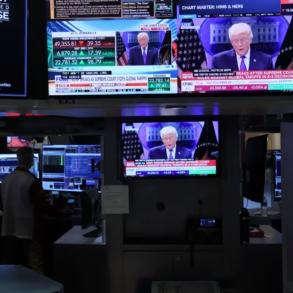
Investors continue to monitor every Fed comment as markets react to the Iran conflict.
Interest rate decisions can influence:
- Stock market performance
- Mortgage costs
- Consumer borrowing rates
- Business investment
- Overall economic growth
If energy supply disruptions continue, inflation pressure may remain. If tensions ease, some of the recent price increases could reverse later this year.