

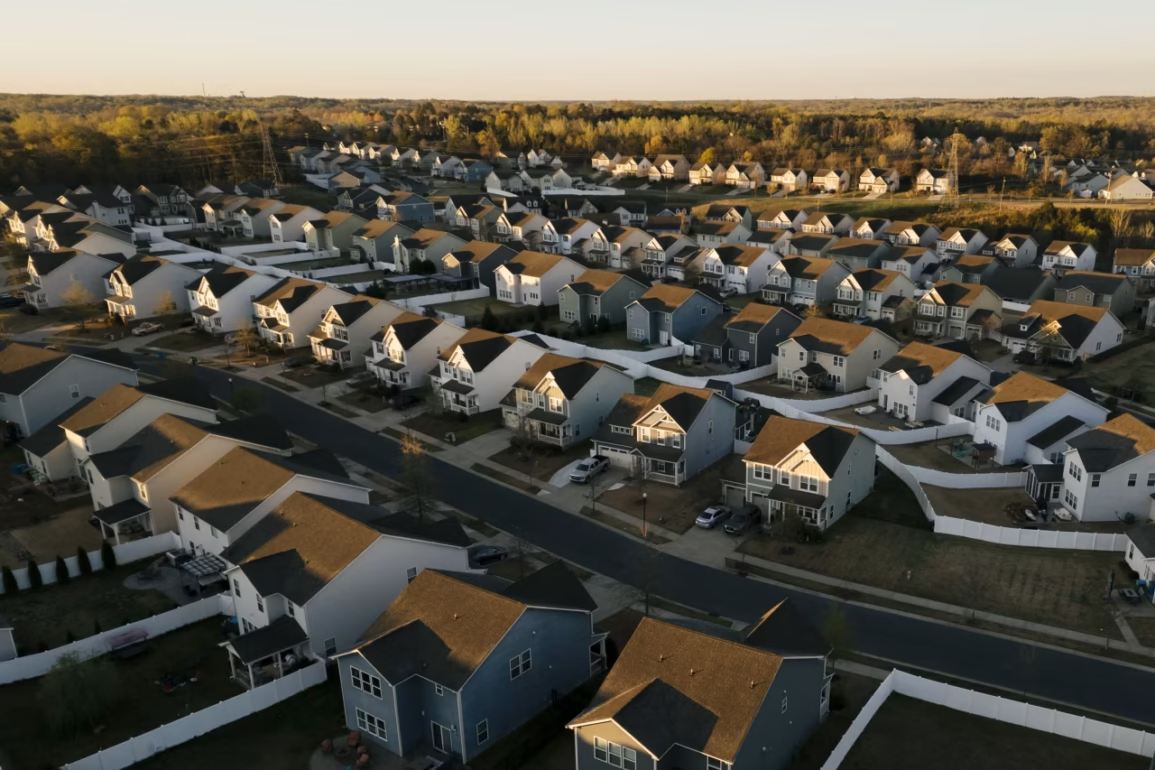

Mortgage rates slipped below 6% this week for the first time in more than three years, offering encouragement to home shoppers as the busy spring buying season approaches.
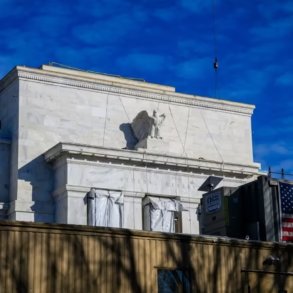
The average rate on a 30-year fixed mortgage fell to 5.98%, its lowest level since September 2022, according to Freddie Mac. The drop marks a steady retreat from the more than 7% peak reached in January of last year. Cooling inflation, broader economic uncertainty and three Federal Reserve interest-rate cuts in the second half of 2025 have all contributed to the decline.
Industry executives say crossing below the 6% threshold could have an outsized psychological impact, drawing more buyers off the sidelines. It may also prompt a rise in refinance applications from homeowners who purchased when borrowing costs were higher.
Buyers understand that the ultra-low 3% rates seen during the pandemic housing boom are unlikely to return, said Bill Banfield, chief business officer at Rocket. But many now see rates in the 5% range as acceptable. “If you can get into that 5% zone,” he said, “they’re willing to do it.”
The timing is significant for a housing market that has been sluggish for three years, with sales stuck at their weakest levels in decades. Spring is typically the most active season for real-estate brokerages and home builders, as families aim to move during the summer break. Sellers also tend to list homes in the spring to capture increased demand.
Still, lower rates haven’t yet triggered a meaningful rebound in activity. Purchase mortgage applications dropped last week to their lowest seasonally adjusted level since April, according to the Mortgage Bankers Association. Existing-home sales slid 8.4% in January, their steepest monthly decline in nearly four years, though economists blamed some of that drop on severe weather.
Affordability challenges persist. Home prices remain close to record highs after rising more than 50% since 2019. Higher electricity bills, insurance premiums and property taxes are adding to ownership costs. Concerns about job security are also weighing on buyers, and the share of canceled home-purchase contracts has risen, Redfin said.
“I just don’t think rates are as important as jobs and confidence” in driving sales, said Margaret Whelan, chief executive of Whelan Advisory, an investment bank focused on housing.
Even so, falling rates directly improve affordability. With mortgage rates near 6% in January, a median-income household could afford a $331,483 home, the highest price level since 2022, according to Zillow.
If borrowing costs continue to ease and demand picks up, real-estate stocks could benefit, including brokerage Compass and mortgage lender Rocket, which also owns Redfin. Retailers such as Home Depot and Lowe’s could see gains as well.
Daniel and Kyla Seely listed their three-bedroom home in Newark, Ohio, for $324,900 in November. After four showings and no offers, they reduced the price and are now hoping lower rates will attract buyers. Daniel Seely said many potential buyers appear to be waiting for rates to dip into the 5% range before making a move.
The Trump administration has emphasized lower mortgage rates as a way to boost affordability. In January, President Trump announced that Fannie Mae and Freddie Mac would purchase $200 billion in mortgage bonds. Fifth Third Bancorp Chief Financial Officer Bryan Preston said the purchases were “marginally helpful,” but additional measures might be needed to meaningfully stimulate the market.

Most economists don’t expect rates to fall much further this year. The Mortgage Bankers Association forecasts an average of 6.1% in 2026, while Fannie Mae projects about 6%. Bhavesh Patel of Chase Home Lending said it is unlikely rates will move far from the high 5% to low 6% range based on current conditions.
Federal Reserve officials recently held rates steady, signaling they want further progress on inflation before considering additional cuts.
There is also a potential downside for buyers: if rates decline further and demand surges, increased competition could drive home prices higher, offsetting affordability gains. Trump has said he doesn’t want prices to fall sharply, arguing that doing so would harm existing homeowners.
For now, buyers retain leverage. About 62% of homes last year sold below their original listing price, the highest share since 2019, according to Redfin.
Correction: The Federal Reserve cut interest rates three times in the second half of 2025. An earlier version misstated the timing of those cuts.