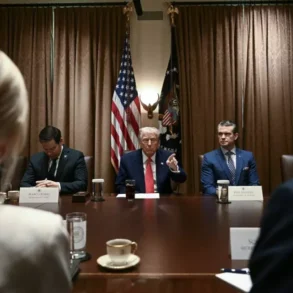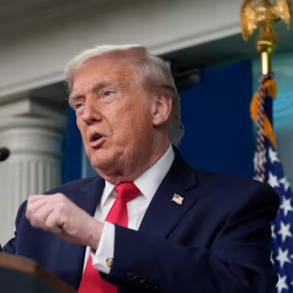

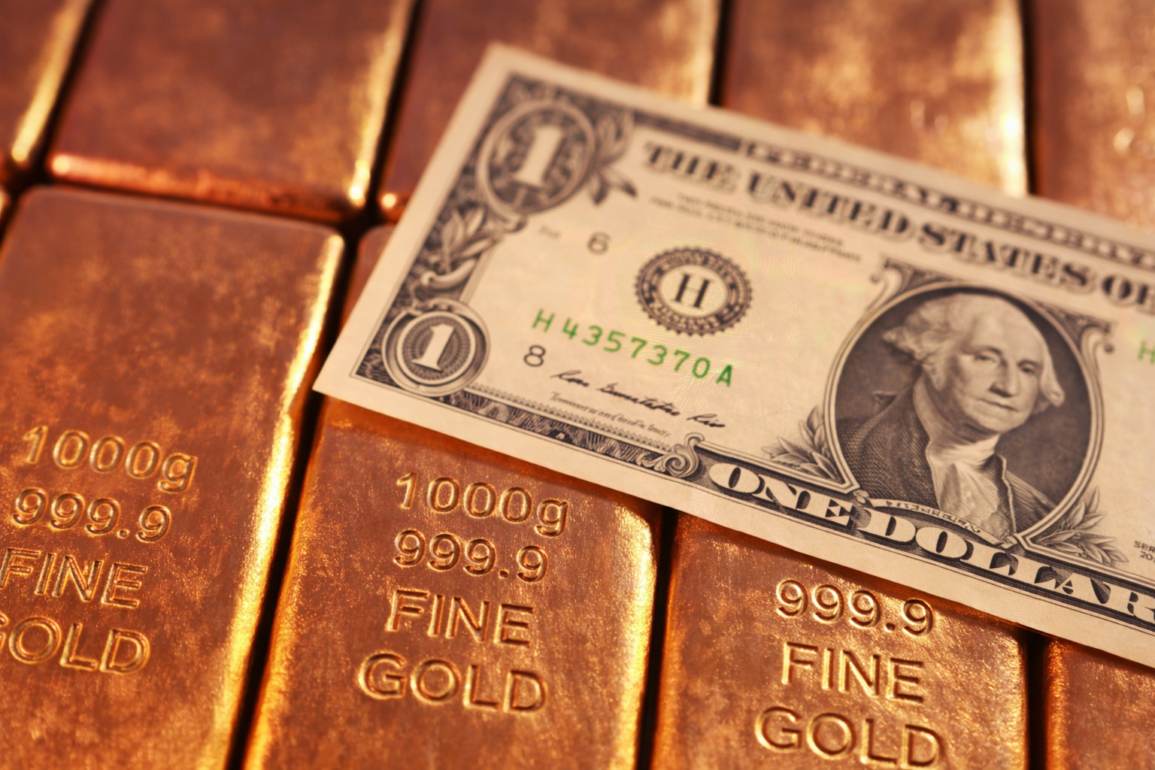

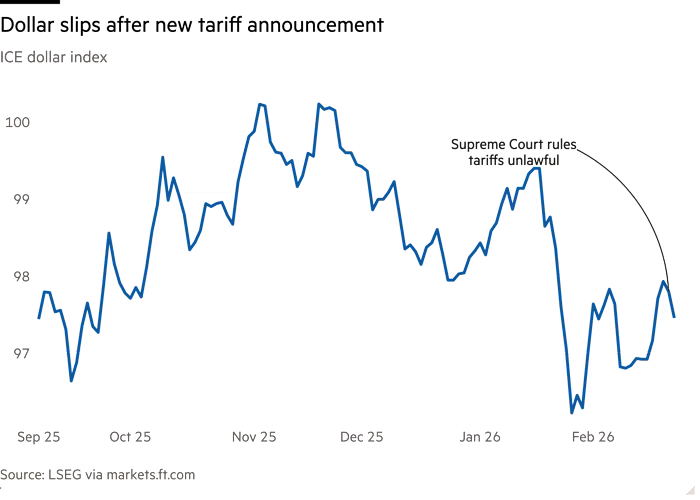
Gold prices climbed and the US dollar slipped on Monday after President Donald Trump introduced a fresh 15 per cent tariff, intensifying uncertainty around global trade. The move came just days after the US Supreme Court ruled that his earlier tariff policy had overstepped presidential authority.
Following Friday’s decision from the nation’s highest court, Trump announced a flat-rate tariff on imports from US trading partners. The new measure is scheduled to take effect on Tuesday. It draws on powers under the 1974 Trade Act, which allows the president to impose trade restrictions for up to 150 days. The Supreme Court had determined that Trump exceeded his authority by using emergency powers to introduce last year’s so-called “liberation day” tariffs.
When Trump first launched his trade campaign in April of last year, financial markets were shaken. Currencies fluctuated sharply, bond yields moved erratically, and stock markets experienced significant swings. However, equity markets have since rebounded, supported in large part by strong gains in technology shares driven by enthusiasm around artificial intelligence. Major US indices have recently reached record levels.
In early trading in London, gold — traditionally seen as a safe-haven asset during times of uncertainty — rose 0.6 per cent to $5,133 per troy ounce. Meanwhile, the dollar weakened by 0.3 per cent against a basket of major currencies.
US stock futures signaled a negative start to the week. Contracts tied to the S&P 500 suggested a 0.5 per cent decline at the open, while futures for the Nasdaq 100 pointed to a 0.7 per cent drop.
European markets showed a more restrained reaction. The Stoxx Europe 600 index slipped 0.3 per cent in early trading. Technology shares led the declines, with the sector’s sub-index falling 0.9 per cent.
In the bond market, yields on 10-year US Treasuries edged down by 0.01 percentage points to 4.07 per cent. Since bond yields move inversely to prices, the slight drop suggests modest buying interest. Bitcoin also fell, declining 2.7 per cent to $65,801.
Market analysts highlighted uncertainty as a key driver of investor caution. Ecaterina Bigos, chief investment officer for Asia ex-Japan at BNP Paribas Asset Management, said investors were unsure how tariff levels would ultimately be structured, leading markets to price in additional risk.
However, some analysts suggested the impact on equities could be limited. RBC Capital Markets noted that the effective tariff rate under the new policy appears lower than under the previous framework. While uncertainty has increased in the near term, overall tariff levels have come down compared with earlier measures.
Goldman Sachs analysts echoed that view. They estimated that the effective tariff rate increase has fallen slightly — from just over 10 percentage points under the earlier regime to around 9 percentage points under the new plan. As a result, the bank said its projections for US economic growth and inflation remain largely unchanged.

In Asia, markets responded more positively. Investors appeared to welcome the prospect that certain exporters could face lower tariff rates than previously expected. Hong Kong’s Hang Seng index jumped 2.4 per cent. Taiwan’s Taiex gained 0.5 per cent, and South Korea’s Kospi rose 0.7 per cent. Japanese markets were closed for a holiday.
Mainland Chinese markets were also closed, though the country could stand to benefit from the lower 15 per cent headline tariff rate. According to economists at Morgan Stanley, the new rate would reduce the average weighted tariff on Asian goods to 17 per cent, down from 20 per cent. Tariffs on Chinese goods specifically would fall to 24 per cent from 32 per cent.
The economists cautioned that the relief might be temporary, as the US is expected to introduce additional sector-specific tariffs in the future. Nevertheless, they suggested that tariff levels on Asian exports may have already reached their peak.
China’s commerce ministry responded cautiously to the Supreme Court ruling. In its first official statement, the ministry reiterated its opposition to unilateral tariffs and said it was conducting a detailed assessment of the ruling’s implications. It also noted reports that the US could pursue alternative measures, such as new trade investigations, to maintain pressure on trading partners. The ministry said China would continue to monitor developments closely and take steps to protect its interests.